
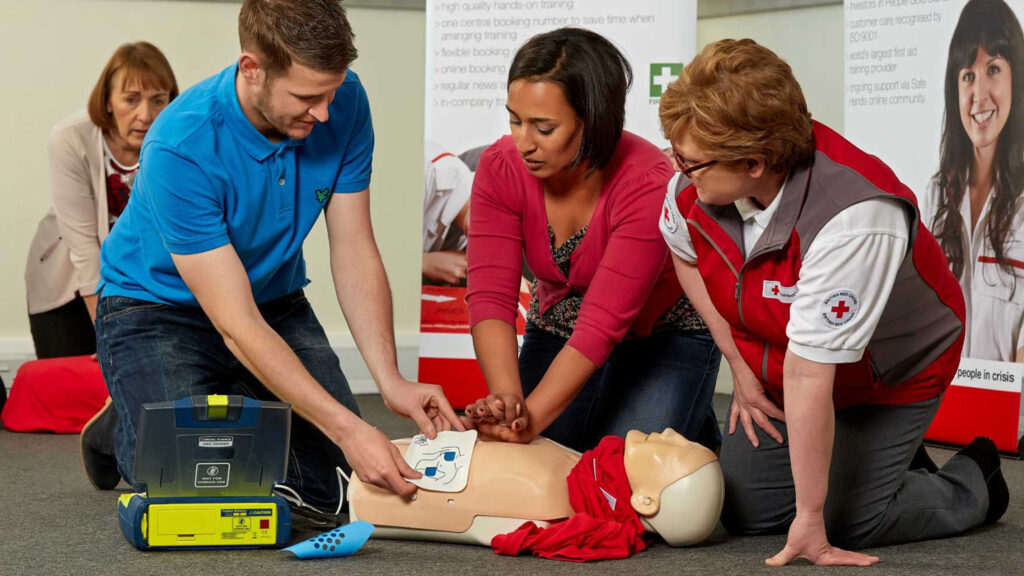
TBL’s Alex Matthews has become our first trained first aider. Here’s his take on his day with the British Red Cross.
What would you do if one of your colleagues suddenly started choking? How about if they suffered an electric shock at work? Or had a seizure?
None of us at TBL are medical experts, but we do know that in an emergency, the right things done at the right time – even if they’re just relatively little things – can be potentially lifesaving. So, when I was asked if I’d be interested in becoming TBL’s designated first aider (and having done something similar in the past) it was an easy “yes”.
The full-day course, delivered in Lancaster by the British Red Cross, was incredibly informative, practical, and engaging. We covered a wide range of essential topics including CPR, choking, wound care, burns, fractures, and how to respond to common medical emergencies. A new addition to the course was the proper use and application of a torniquet which I found really interesting.
The instructor was knowledgeable and experienced, and used real-life scenarios to help us understand the importance of quick and correct responses. Hands-on practice with CPR mannequins and first aid kits made the training more interactive and helped build confidence in applying the skills in real-life situations.
And each break time was a chance for everyone to compare notes and discuss what we’d learnt.
Having completed and passed the course, I feel more confident in providing first aid in the event of an emergency. And I’ve developed and refreshed some skills that could be valuable not just in the workplace, but anywhere.
If there’s no one in your team/organisation who’s done the training, I’d really recommend it.
First aid course with the British Red Cross: what’s covered?
- Dealing with an emergency (assessing and monitoring a casualty, where to get help, electrical incidents).
- Unresponsive and breathing adult (how to open and maintain clear airways).
- Unresponsive and not breathing adult (CPR, face shields and pocket masks, mouth to nose).
- AED (Using an AED (defibrillator), chain of survival).
- Choking adult.
- Hygiene techniques.
- Bleeding and wounds (bleeding heavily from a wound (e.g. limbs and embedded object in a wound), small blisters and splinters, small bruises and wounds, nosebleed).
- Shock and internal bleeding.
- Accident recording, reporting and Control of Substances Hazardous to Health (COSHH). Includes health and safety first aid regulations, first aid kits, and Reporting of Injuries, Diseases and Dangerous Occurrences Regulations (RIDDOR).
- Burns (incl. electrical burns, chemical burns, chemical burns to the eyes).


